




Vol. 28 - Num. 109
Original Papers
Prevalence of body dissatisfaction among preadolescents and the influence of social media: a cross-sectional study
Laura Rodríguez Martíneza, Paz González Rodríguezb
aPediatra. CS de Munguía. Munguía. Vizcaya. España.
bPediatra. CS Barrio del Pilar. Madrid. España.
Correspondence: L Rodríguez. E-mail: l.rodriguezma@hotmail.com
Reference of this article: Rodríguez Martínez L, González Rodríguez P. Prevalence of body dissatisfaction among preadolescents and the influence of social media: a cross-sectional study . Rev Pediatr Aten Primaria. 2026;28:39-49. https://doi.org/10.60147/dfb38637
Published in Internet: 25-02-2026 - Visits: 6890
Abstract
Introduction: body image begins to develop in childhood and is influenced by sociocultural factors. During preadolescence, a stage characterized by heightened sensitivity to social comparison and the internalization of beauty ideals, intensive social media use may constitute a risk factor for body dissatisfaction. This study aims to analyze the prevalence of body dissatisfaction among preadolescents and its possible relationship with social media use.
Material and methods: an observational, cross-sectional, analytical, and descriptive study was conducted involving 171 preadolescents aged 9 to 12 years from the Munguía health area (Biscay). The Collins Figure Rating Scale was used to assess body perception and dissatisfaction, and validated questionnaires were administered to evaluate social media usage habits. Statistical analyses were performed using the chi-square test, Student t-test, ANOVA, or Kruskal-Wallis test according to the data distribution, along with effect sizes and concordance coefficients.
Results: some degree of body dissatisfaction was reported by 56.1% of participants, with a higher prevalence among girls (p = 0.003) and children without siblings (p <0.001). While no significant association was found between general social media use and body dissatisfaction, we observed a moderate association with Instagram use (p = 0.011).
Conclusions: we observed a high prevalence of body dissatisfaction in preadolescents, particularly among girls, and associated with Instagram use. These findings highlight the need for early preventive interventions that promote a positive body image and a critical approach to social media use.
Keywords
● Body dissatisfaction ● Body image ● Preadolescent ● Social mediaINTRODUCTION
The term body image refers to the mental representation that individuals have of their own bodies. It is a multifaceted construct that encompasses perceptions, attitudes, and emotions regarding physical appearance.1 It starts to develop from birth and depends on both objective aspects (body shape or size) and psychological, social, and cultural factors.2
Body dissatisfaction stems from the discrepancy between a person’s subjective evaluation of their actual body and their ideal body, and manifests as negative thoughts and emotions about the body, with an impact on psychological and physical wellbeing.2 Various studies show that concerns and distorted perceptions about one’s body can develop even from early ages in relation to the internalization of esthetic ideals reinforced by family, peers and mass media.3-5 Body dissatisfaction is associated with low self-esteem, anxiety, depression and maladaptive eating behaviors.3,6,7
The extensive use of digital technologies, especially social media, has increased exposure to contents that promote unrealistic beauty standards, which is associated with higher levels of body dissatisfaction.6,8,9 The use of digital media has become an integral part of daily life, especially among youth.10,11 In Spain, 98% of adolescents have access to the internet, and use of social media is the main online activity of 80% of them, in some cases starting before age 10 years. One out of three underage individuals engages in problematic internet use.12,13
Social media platforms do not only facilitate social interaction but also disseminate beauty ideals and promote constant comparison.14 Algorithms, filters, and the pursuit of validation through “likes” contribute to distorting body image and beauty standards.15,16
Preadolescence, marked by physical and social changes, is a particularly vulnerable stage for the development of negative body image perceptions under the influence of biological, cultural and social factors.2,3 The immaturity of critical thinking skills facilitates the internalization of unrealistic beauty standards and social comparison, increasing the probability of certain behaviors, such as restrictive eating or social withdrawal.11 The sensitivity to the opinion of others at a time when identity is developing makes preadolescents particularly vulnerable to external influences, like social media.9 In spite of this, few studies to date have focused on this population.
Since there is evidence of an association between greater exposure to social media and high levels of body dissatisfaction in both adolescents and adults,14-16 our study considers the possibility of a similar pattern occurring in the preadolescent population. Understanding this association will allow the development of educational, family-based and community-based interventions to promote a positive body image from the early stages of development.
The objectives of the study were to determine the prevalence of body dissatisfaction among preadolescents in Biscay, to identify their digital technology usage habits, and to analyze the association between their use of these technologies and body image perception.
MATERIAL AND METHODS
We conducted an observational, analytical, and cross-sectional study at the Munguía primary care center in Mungialdea county (Biscay).
The data were collected in March and April 2025. The sample included preadolescents aged 9 to 12 years enrolled in schools in Mungialdea. We excluded children with physical disabilities, eating disorders or a psychiatric diagnosis.
We estimated that a random sample of 168 participants would be sufficient to estimate, with a 95% confidence level and a margin of error of ±7 percentage points, a population percentage with an expected value of approximately 57%.4
The sample was selected using one-stage cluster sampling. Of the eight selected schools, two agreed to participate, and we included all students enrolled in years 4 through 6 of primary education and year 1 of compulsory secondary education (ESO). The fact that only two schools participated may have limited the representativeness of the sample and should be taken into account when interpreting and generalizing the results.
The study was approved by the Clinical Research Ethics Committee of the Basque Country. We obtained informed consent from the legal guardians and assent from the minors. The data collection took place during school hours in guided sessions lasting up to 60 minutes.
We collected sociodemographic and anthropometric data: age, sex, number of siblings, weight and height (direct measurement), and body mass index (BMI) calculated according to standardized protocols. Body image and body dissatisfaction were assessed using the Collins Figure-Rating Scale, which has been validated in children, to compare their perceived body shape with their ideal body shape.4,17 Digital habits and social media use were assessed using two questionnaires: the Survey on Social Media Usage Habits developed by the Official Board of Psychology of Castilla y León18 and the Social Media Use Questionnaire, designed and validated for preadolescents in the Principality of Asturias.19
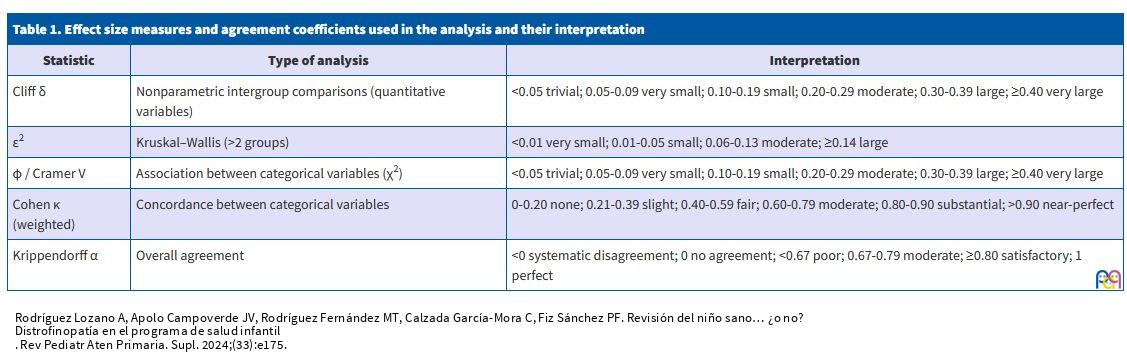
The statistical analysis was performed with the R software package (v 4.4.0). We obtained descriptive statistics and performed the χ² test, Student t test, ANOVA or Kruskal-Wallis test according to the nature and distribution of the variables. We calculated effect sizes (Cliff δ, ϵ², phi and Cramer V) and coefficients of agreement (weighted kappa and Krippendorff α), which we interpreted with the thresholds detailed in Table 1. Statistical significance was defined as a p value of less than 0.05 (95% confidence interval [95 CI]).
| Table 1. Effect size measures and agreement coefficients used in the analysis and their interpretation | ||
|---|---|---|
| Statistic | Type of analysis | Interpretation |
| Cliff δ | Nonparametric intergroup comparisons (quantitative variables) | <0.05 trivial; 0.05-0.09 very small; 0.10-0.19 small; 0.20-0.29 moderate; 0.30-0.39 large; ≥0.40 very large |
| ε2 | Kruskal–Wallis (>2 groups) | <0.01 very small; 0.01-0.05 small; 0.06-0.13 moderate; ≥0.14 large |
| φ / Cramer V | Association between categorical variables (χ2) | <0.05 trivial; 0.05-0.09 very small; 0.10-0.19 small; 0.20-0.29 moderate; 0.30-0.39 large; ≥0.40 very large |
| Cohen κ (weighted) | Concordance between categorical variables | 0-0.20 none; 0.21-0.39 slight; 0.40-0.59 fair; 0.60-0.79 moderate; 0.80-0.90 substantial; >0.90 near-perfect |
| Krippendorff α | Overall agreement | <0 systematic disagreement; 0 no agreement; <0.67 poor; 0.67-0.79 moderate; ≥0.80 satisfactory; 1 perfect |
The study adhered to the principles of the Declaration of Helsinki and the General Data Protection Regulation, safeguarding the anonymity and confidentiality of participants.
RESULTS
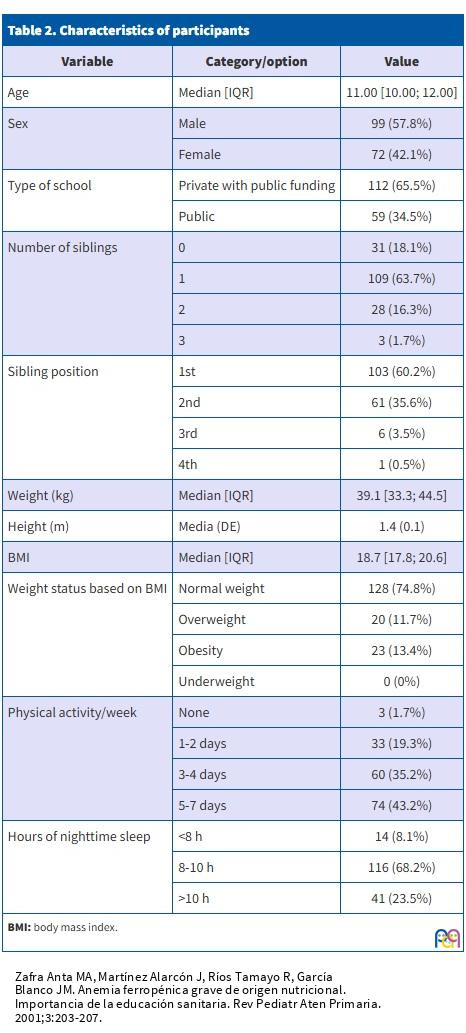
The final sample consisted of 171 preadolescents. The main characteristics of the participants are summarized in Table 2.
| Table 2. Characteristics of participants | ||
|---|---|---|
| Variable | Category/option | Value |
| Age | Median [IQR] | 11.00 [10.00; 12.00] |
| Sex | Male | 99 (57.8%) |
| Female | 72 (42.1%) | |
| Type of school | Private with public funding | 112 (65.5%) |
| Public | 59 (34.5%) | |
| Number of siblings | 0 | 31 (18.1%) |
| 1 | 109 (63.7%) | |
| 2 | 28 (16.3%) | |
| 3 | 3 (1.7%) | |
| Sibling position | 1st | 103 (60.2%) |
| 2nd | 61 (35.6%) | |
| 3rd | 6 (3.5%) | |
| 4th | 1 (0.5%) | |
| Weight (kg) | Median [IQR] | 39.1 [33.3; 44.5] |
| Height (m) | Media (DE) | 1.4 (0.1) |
| BMI | Median [IQR] | 18.7 [17.8; 20.6] |
| Weight status based on BMI | Normal weight | 128 (74.8%) |
| Overweight | 20 (11.7%) | |
| Obesity | 23 (13.4%) | |
| Underweight | 0 (0%) | |
| Physical activity/week | None | 3 (1.7%) |
| 1-2 days | 33 (19.3%) | |
| 3-4 days | 60 (35.2%) | |
| 5-7 days | 74 (43.2%) | |
| Hours of nighttime sleep | <8 h | 14 (8.1%) |
| 8-10 h | 116 (68.2%) | |
| >10 h | 41 (23.5%) | |
|
BMI: body mass index. |
||
Body dissatisfaction
Of the total participants, 43.9% reported being satisfied with their bodies, while 56.1% reported some degree of dissatisfaction. There were significant differences based on sex: body dissatisfaction was higher among girls than among boys (median −0.50 vs. 0.00; p = 0.003). The effect size, estimated using Cliff’s δ, was moderate (r = 0.25; 95% CI: 0.08 to 0.41)
We found no significant differences based on age (p = 0.086; ϵ² = 0.008) or type of school (p = 0.075). However, there were significant differences based on whether the child had siblings (p < 0.001): only children showed higher levels of body dissatisfaction, with a large effect size (r = −0.39; 95% CI: −0.57 to 0.19)
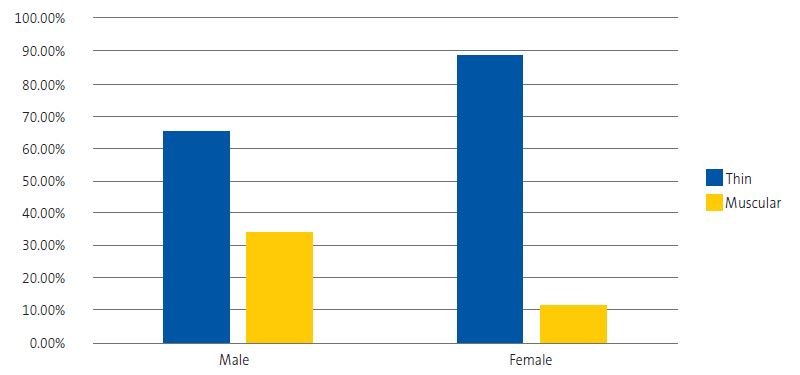
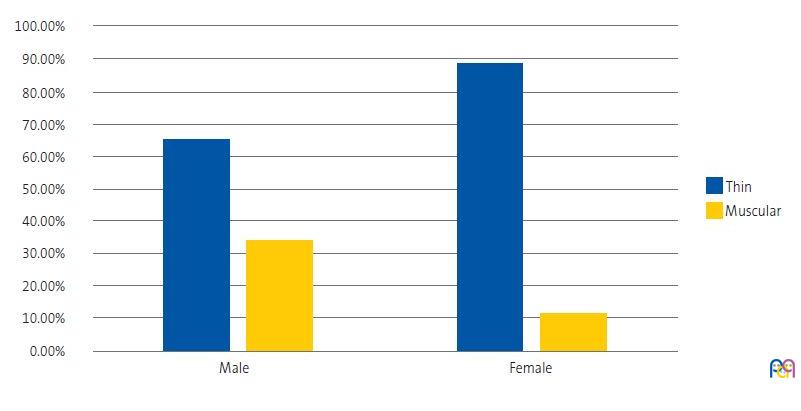
A majority of those who expressed body dissatisfaction (76.1%) said they wanted a slimmer body, compared to 23.9% who would prefer a more muscular body. This difference was statistically significant (p <0.001), with a large effect size that was clinically relevant (Cohen h = 1.10). Comparing by sex (Figure 1), a higher proportion of girls than of boys wanted a slimmer body (88,6% vs. 65,4%), a difference that was also significant (p = 0.016; Cliff δ = 0.25), with a medium effect size.
| Figure 1. Graph showing significant differences in the desired body type based on sex. Girls with body dissatisfaction (88.64%) were more likely to want a thinner body compared to boys (65.38%). In contrast, 34.62% of boys wanted a more muscular body, compared to 11.36% of girls. This difference was statistically significant (p = 0.016), with a moderate effect size (Cliff δ = 0.25). |
|---|
 |
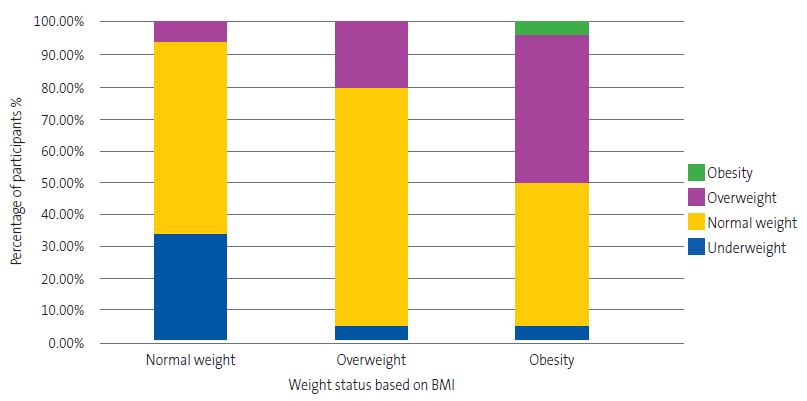
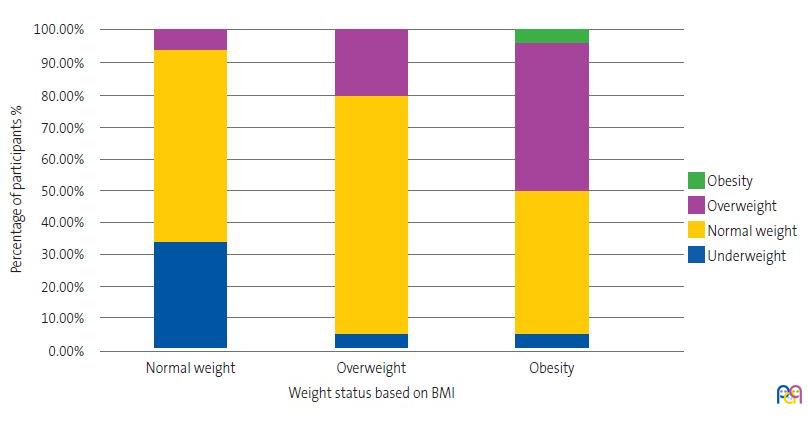
Most participants perceived their weight status as normal, which was generally consistent with the BMI classification, although the subjective and objective measures did not always agree (Figure 2). The concordance analysis yielded a kappa coefficient of 0.318 (p < 0.001), reflecting moderate and significant agreement between perceived and actual weight status. Overall, there was agreement between the two measures in 59.4% of the sample, although a degree of difference between perceived and actual status persisted at the individual level.
| Figure 2. Graph illustrating the correlation between perceived weight status and actual weight (BMI) |
|---|
 |
Digital media use habits
Table 3 summarizes the main digital media habits of the sample.
| Table 3. Electronic device use habits | |||
|---|---|---|---|
| Access to and use of devices | Percentage | Consumed content | Percentage |
| Internet at home | 98.8% | Music | 43.9% |
| Internet use | 100% | Videogames | 35.1% |
| Own smartphone | 43.3% | Sports | 32.8% |
| Gaming console | 59.1% | Humor | 26.3% |
| Own computer | 53.8% | Health and beauty | 14.6% |
| Own tablet | 49.1% | Art | 11.1% |
| Smartwatch | 47.4% | Fashion | 8.8% |
| Family smartphone | 46,2% | Screentime on weekdays | |
| Schoolwork | 91.2% | Less than 1 hour | 50.2% |
| Listening to music | 84.8% | 1-3 hours | 25.7% |
| Non-academic browsing | 71.9% | 3-6 hours | 3.5% |
| Streaming in platforms | 92.4% | More than 6 hours | 0.5% |
| Gaming alone | 60.8% | Screentime on weekend days | |
| Video calls with family | 60.2% | Less than 1 hour | 22.8% |
| Instant messaging with family | 56.7% | 1-3 hours | 53.2% |
| Video calls with friends | 45.6% | 3-6 hours | 13.4% |
| News | 28.1% | More than 6 hours | 5.8% |
| Use of social media and platforms | Sleeps with device in bedroom | 34.7% | |
| YouTube | 93.6% | Use before bedtime | |
| 49.7% | Smartphone | 18.8% | |
| TikTok | 38.0% | Tablet | 17.6% |
| Own profile in social media platform | 28.7% | Computer | 5.2% |
| 19.3% | Smart TV | 31.7% | |
| 8.2% | Family supervision and IT use rules | ||
| 1.8% | Any form of family supervision | 91.0% | |
| Following… | Time limits | 79.1% | |
| Influencers | 55.0% | Site access restriction/supervision | 66.4% |
| Friends | 21.6% | Social media restriction/supervision | 65.4% |
| Family | 15.2% | Parental controls in devices | 43.6% |
| Schoolmates | 14.0% | Rules about electronic devices in school | 99.4% |
| Teachers | 2.3% | ||
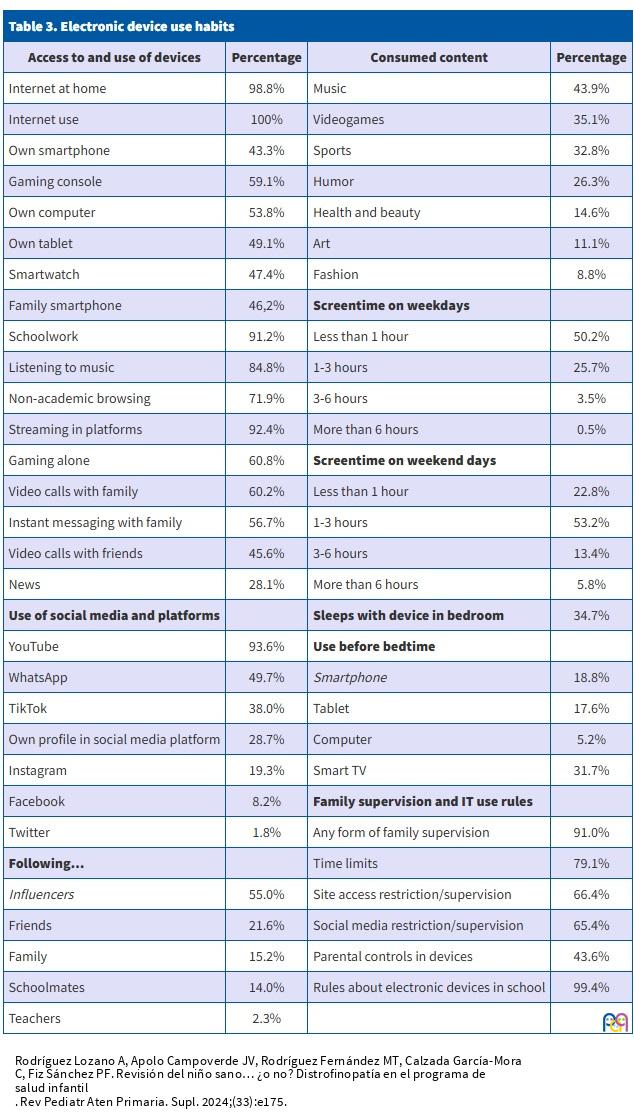
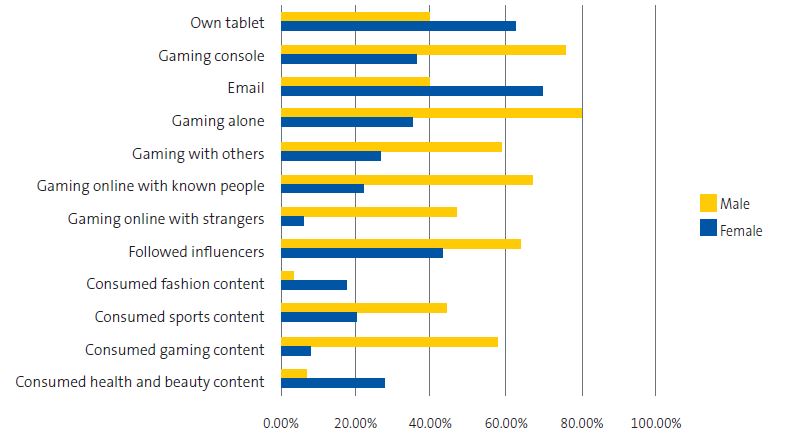
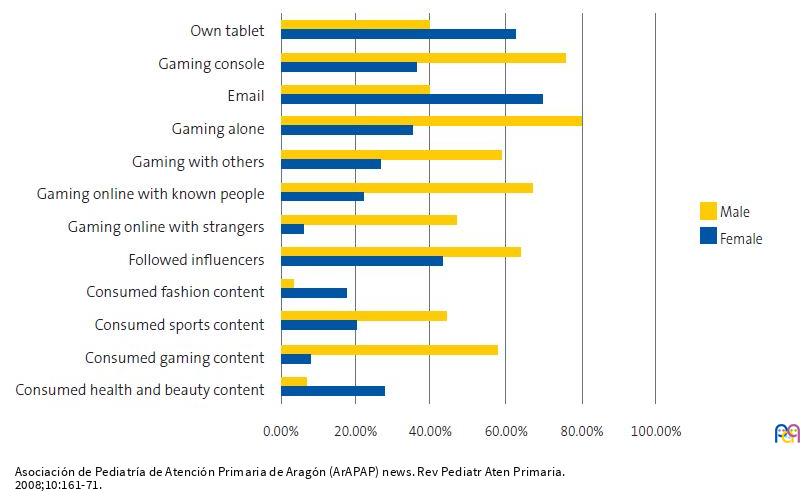
We found statistically significant differences in use patterns based on sex (Figure 3). Girls were more likely to have a tablet of their own (62.5% vs. 39.4%; p = 0.005) and reported going online to check email more frequently (69.4% vs. 39.4%; p < 0.001). They also consumed content related to fashion, health and beauty more often (p < 0.01). In contrast, boys were more likely to use gaming consoles (75.8% vs. 36.1%; p < 0.001) and play online games, both alone (79.8% vs. 34.7%; p <0.001) and with other people, either face-to-face (58.6% vs. 26,4%; p <0,001), online with people they knew (66.7% vs. 22.2%; p < 0.001) or online with strangers (46.5% vs. 5.6%; p < 0.001). They also consumed content related to sports and gaming more often than girls (p < 0.01), and were more likely to follow influencers.
| Figure 3. Graph showing the significant differences in digital devices and media use between male and female participants |
|---|
 |
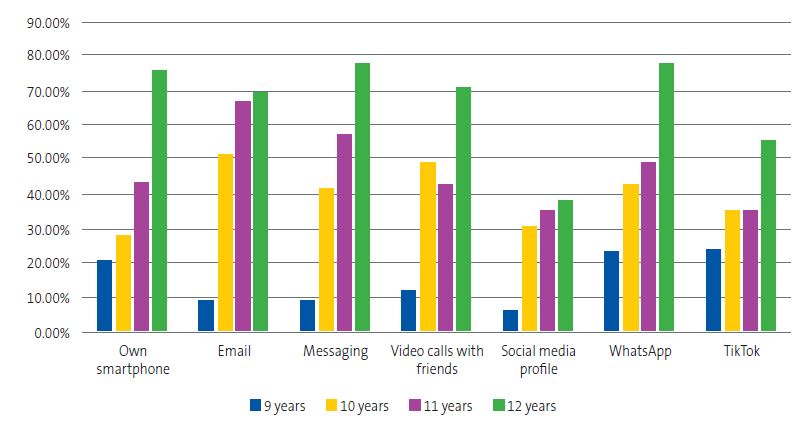
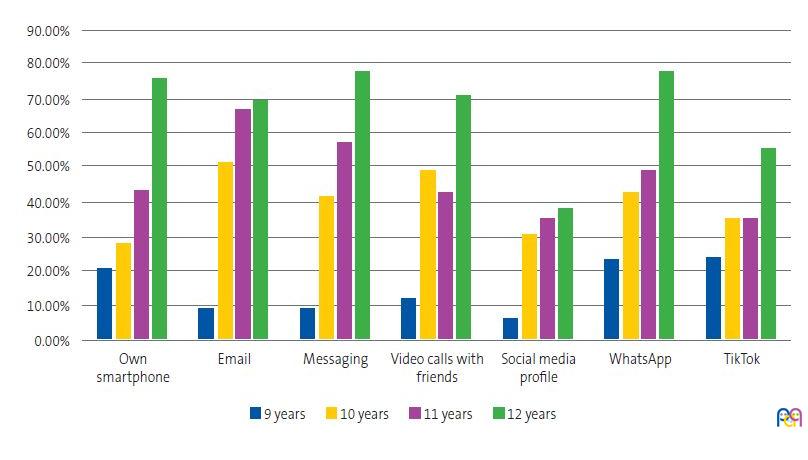
With regard to usage according to age, we observed a gradual increase in the access to and use of certain technologies. The percentage of children who had a smartphone of their own increased significantly with age, from 20.6% at age 9 to 75.6% at age 12 (p < 0.001). Similarly, the use of WhatsApp and email was significantly more frequent in older children (p < 0.001). Figure 4 shows the trends in the use of digital media between ages 9 and 12 years, including only variables with statistically significant differences.
| Figura 4. Graph showing trends in use of digital devices and media based on age |
|---|
 |
There were no significant differences in usage habits in relation to the type of school, having siblings, sleep duration, or level of physical activity.
Association between body dissatisfaction and social media use
We analyzed the association between body dissatisfaction and the use of several social media platforms (YouTube, Twitch, WhatsApp, Instagram, Twitter, Facebook, and other) using bivariate analyses and estimating the effect size with the Cliff δ. We did not find significant differences between users and non-users (p = 0.953; δ = −0.01; 95 CI: −0.36 to 0.34), which suggests the absence of a relevant association in the study sample.
When we considered specific social media platforms, only Instagram use was significantly associated with body dissatisfaction (p = 0.011), with a moderate effect size (δ = 0.27; 95 CI: 0.06 to 0.46). In contrast, the use of other platforms (YouTube, Twitch, WhatsApp, Twitter, Facebook, TikTok, other) was not significantly associated with body dissatisfaction (p > 0.3 for all), with null or very small effect sizes (Table 4).
| Table 4. Association between the use of specific social media platforms and body dissatisfaction | ||||||
|---|---|---|---|---|---|---|
| Users N (%) | Median dissatisf. [IQR] | p-value | r (Cliff δ) | 95 CI | Clinical interpretation | |
| Had user profile(s) | 49 (28.7%) | 0.00 [-1.00; 0.00] | 0.783 | 0.03 | [-0.16; 0.21] | Trivial |
| Visits social media platforms | 161 (94.1%) | 0.00 [-1.00; 0.00] | 0.953 | -0.01 | [-0.36; 0.34] | Trivial |
| YouTube | 160 (93.6%) | 0.00 [-1.00; 0.00] | 0.720 | -0.06 | [-0.39; 0.28] | Very small |
| Twitch | 5 (2.9%) | 0.00 [0.00; 0.00] | 0.428 | -0.20 | [-0.61; 0.30] | Small |
| 85 (49.7%) | 0.00 [-1.00; 0.00] | 0.326 | 0.08 | [-0.09; 0.25] | Very small | |
| 33 (19.3%) | -1.00 [-1.00; 0.00] | 0.011 | 0.27 | [0.06; 0.46] | Moderate | |
| 3 (1.8%) | 0.00 [-0.50; 0.00] | 0.955 | -0.02 | [-0.59; 0.57] | Trivial | |
| 14 (8.2%) | -0.25 [-1.00; 0.00] | 0.950 | 0.18 | [0.00; 0.35] | Small | |
| TikTok | 65 (38.0%) | 0.00 [-1.00; 0.00] | 0.950 | 0.18 | [0.00; 0.35] | Small |
| Other social media | 12 (7.0%) | 0.00 [-0.62; 0.00] | 0.747 | -0.05 | [-0.37; 0.28] | Very small |
|
95 CI: 95% confidence interval. |
||||||

DISCUSSION
We conducted this study with three main objectives. First, to analyze the prevalence of body dissatisfaction among preadolescents. More than half of the participants (56.1%) reported some degree of dissatisfaction with their appearance, indicating that this is a common phenomenon at this stage of development. This prevalence was consistent with previous studies that have reported body dissatisfaction as a widespread issue, even before adolescence.4,20
Consistent with the existing literature, we observed significant differences between the sexes, with a higher prevalence of body dissatisfaction among girls compared to boys (p = 0.003, medium effect size). This finding confirms that girls are more vulnerable to socially-promoted ideals of thinness, which are internalized from an early age through various agents of socialization, particularly digital media.9,14,20
We also identified a statistically significant association between being an only child and higher levels of body dissatisfaction (p < 0.001, large effect size). Although previous research has hardly addressed this factor, this finding could be explained by the lack of family references to compare oneself with or seek validation from, which could magnify the influence of external references, like those found in social media. Given the cross-sectional design of the study, further research is needed to confirm this potential association, which could be an interesting area to explore in future studies.
Regarding the desire for physical change, most of the participants who expressed dissatisfaction would prefer a slimmer body, a trend that was more prevalent in girls compared to boys (88.6% vs. 65.4%). Boys tended to prefer a more muscular body, reflecting the different body ideals internalized according to sex: thinness in women and muscle mass in men, in agreement with previous studies.4
When we assessed the strength of the correlation between participants’ subjective perceptions of their weight status and their actual BMI, we found that it was moderate (κ = 0.318). There was a tendency to underestimate body weight, with participants exhibiting perceptions that have been associated with body dissatisfaction and maladaptive eating behaviors in the previous literature.9,21
There were no differences based on age or type of school, supporting the notion that factors such as puberty and relationships with peers or family have a stronger impact on self-image than fixed demographic variables. Therefore, preventive interventions should focus on biopsychosocial development milestones.5
The second objective was to analyze digital habits and social media use. The data showed widespread use of these platforms: 94.1% of participants reported using social media, similar to the prevalence reported in recent studies.19 However, only 28.6% had active user profiles, which could be due to the age restrictions set by the platforms. Still, this limitation does not keep preadolescents from being exposed to potentially harmful content, especially considering that influencers are the figures most frequently followed by minors.22
As regards the type of content consumed, it most frequently involved music, gaming, or humor, while topics such as politics or gastronomy generated little interest. This finding poses significant challenges for media literacy, which must adapt to the current interests of this cohort in order to be effective. We identified sex-specific consumption patterns: boys consumed more sports- and gaming-related contents, while girls were more likely to consume contents related to fashion, art, music or health/beauty, which was consistent with previous studies.19,23
With regard to internet use, recreational use outweighed academic use, with very prevalent use of platforms such as YouTube (93.5%) or TikTok (38%). One-third of preadolescents used screens before bedtime, which could affect their sleep. Most families (91%) set rules regarding the use of digital devices and media, although only 43.6% used monitoring tools. When it came to the schools, 99.4% of participants reported that there were rules in place, reflecting a growing concern that access should be supervised.
The third objective was to explore the association between body dissatisfaction and social media use. We found no significant association between overall social media use and body dissatisfaction in the sample, contrary to what has been reported in previous studies of adolescents and young adults.8,21 These results suggest that the association between social media and body dissatisfaction may manifest differently during preadolescence—a stage characterized by widespread, but, in many cases, still moderate use that is supervised by the family. In addition, growing public awareness of the risks associated with screentime and social media (through school campaigns, and family- and community-based initiatives) may be driving more conscious consumption patterns and mitigating the influence of unrealistic, idealized content.
When we analyzed specific social media platforms, we identified a significant association with a moderate effect size between Instagram use and body dissatisfaction (p = 0.011, δ = 0.27), consistent with previous studies that have identified Instagram as one of the platforms with the greatest negative impact on body image.6,21 The visual nature of the application and the exposure to idealized images foster social comparison, which can elicit or magnify concerns about one’s appearance and reduce self-esteem, particularly among young women.24,25
In contrast, we did not find a significant association with other platforms (YouTube, TikTok, Twitch, WhatsApp, Facebook, and Twitter), which suggests that the impact of social media on self-image depends on the type of content, frequency of exposure, and dynamics of social interaction.6
These findings underscore the need for future research to investigate more thoroughly the effects of different types of social media, content, interactions, and family and social environments on body image among preadolescents.
There are several limitations to this study. Its cross-sectional design does not allow for establishing causality, and the small sample size, with participation of only two schools, limits the representativeness of the results. The information on digital habits was self-reported, which may have been a source of social desirability bias; furthermore, we did not consider the stage of pubertal development, a factor that could affect body image. In future research, it would be useful to include measures of pubertal development, for example, the Tanner scale, to control for this variable, as it is crucial in preadolescence. Nonetheless, our findings provide a solid foundation for future research and to guide preventive interventions adapted to this age group.
CONCLUSIONS
More than half of preadolescents reported body dissatisfaction, with a higher prevalence among girls and only children.
Although social media use was widespread, body dissatisfaction was only significantly associated with the use of Instagram.
Early exposure to the digital environment poses health care and education challenges. Despite the limitations of the study, its results provide a solid foundation for preventive interventions, such as media literacy workshops and efforts to promote body diversity in school and family settings. Findings such as the specific impact of Instagram and the differences between boys and girls can guide the selection of contents and strategies for these interventions, adapting them to the needs of each target population. Longitudinal studies are required to investigate the mechanisms underlying the association between social media use and body image during preadolescence.
CONFLICTS OF INTEREST
The authors have no conflicts of interest to declare in relation to the presentation and publication of this article.
AUTHORSHIP
All authors contributed equally to the published manuscript.
This study has been submitted to the 2026 Congress of the Asociación Española de Pediatría de Atención Primaria (AEPAP) for presentation of partial results . The present manuscript offers more detailed and complete information about the study.
REFERENCES
- Prnjak K, Jukic I, Mitchison D, Griffiths S, Hay P. Body image as a multidimensional concept: A systematic review of body image facets in eating disorders and muscle dysmorphia. Body Image. 2022;42:347-60. https://doi.org/10.1016/j.bodyim.2022.07.006
- Grogan S. Body image. 4.ª ed. Londres: Routledge; 2021. https://doi.org/10.4324/9781003100041
- Zanlorenci S, Gonçalves l, Moraes MS, Santiago LN, Pedroso MS, Silva DAS. Comprehensive scoping review on body image perceptions and influences in children and adolescents. Eur J Investig Health Psychol Educ. 2024;14:2716-34. https://doi.org/10.3390/ejihpe14100179
- Navarro-Patón R, Mecías-Calvo M, Villa SP, Anaya V, Martí-González M, Lago-Ballesteros J. Perceptions of the body and body dissatisfaction in primary education children according to gender and age. A cross-sectional study. Int J Environ Res Public Health. 2021;18(23):12460. https://doi.org/10.3390/ijerph182312460
- Pecini C, Di Bernardo GA, Crapolicchio E, Vezzali l, Andrighetto l. Body shame in 7–12-year-old girls and boys: the role of parental attention to children’s appearance. Sex Roles. 2023;89(1–2):82-95. https://doi.org/10.1007/s11199-023-01385-7
- Suhag K, Rauniyar S. Social Media Effects Regarding Eating Disorders and Body Image in Young Adolescents. Cureus. 2024;16(4):e58674. https://doi.org/10.7759/cureus.58674
- Sanzari CM, Gorrell S, Anderson LM, Reilly EE, Niemiec MA, Orloff NC, et al. The impact of social media use on body image and disordered eating behaviors: Content matters more than duration of exposure. Eat Behav. 2023; 49:101722. https://doi.org/10.1016/j.eatbeh.2023
- Cataldo I, Lepri B, Neoh MJY, Esposito G. Social Media Usage and Development of Psychiatric Disorders in Childhood and Adolescence: A Review. Front Psychiatry. 2021;11:508595. https://doi.org/10.3389/fpsyt.2020.508595
- Hrafnkelsdottir SM, Brychta RJ, Rognvaldsdottir V, Chen KY, Johannsson E, Guðmundsdottir SL, et al. Screen time and body image in Icelandic adolescents: sex-specific cross-sectional and longitudinal associations. Int J Environ Res Public Health. 2022;19(3):1308. https://doi.org/10.3390/ijerph19031308
- Serrano Marchuet P, López Granados L. Redes sociales y pantallas: impacto en la edad pediátrica. Pediatr Integral. 2023;27(4):193-200
- Impacto del aumento del uso de Internet y las redes sociales en la salud mental de jóvenes y adolescentes. Madrid: Observatorio Nacional de Tecnología y Sociedad, Red.es, Secretaría de Estado de Digitalización e Inteligencia Artificial, Ministerio de Asuntos Económicos y Transformación Digital; 2023 [online] [accessed 19/02/2026]. Available at www.ontsi.es/sites/ontsi/files/2023-10/policybriefredesocialesaludmentaljovenesyadolescentes.pdf
- Derechos sin conexión: un análisis sobre derechos de la infancia y la adolescencia y su protección en el entorno digital. Madrid: Save the Children España; 2024 [online] [accessed 19/02/2026]. Available at www.savethechildren.es/sites/default/files/2024-07/Informe_Derechos_SinConexion.pdf
- Encuesta sobre uso de drogas en Enseñanzas Secundarias en España (ESTUDES), 1994-2023. Madrid: Observatorio Español de las Drogas y las Adicciones, Delegación del Gobierno para el Plan Nacional sobre Drogas [online] [accessed 19/02/2026]. Available at https://pnsd.sanidad.gob.es/profesionales/sistemasInformacion/sistemaInformacion/pdf/ESTUDES_2023_Resumen_ejecutivo.pdf
- Jankauskiene R, Baceviciene M. Media pressures, internalization of appearance ideals and disordered eating among adolescent girls and boys: testing the moderating role of body appreciation. Nutrients. 2022;14(11):2227. https://doi.org/10.3390/nu14112227
- González-Nuevo C, Cuesta M, Muñiz J. Concern about appearance on Instagram and Facebook: Measurement and links with eating disorders. Cyberpsychology: Journal of Psychosocial Research on Cyberspace. 2021;15(2):9. https://doi.org/10.5817/CP2021-2-9
- Vuong AT, Jarman HK, Doley JR, McLean SA. Social media use and body dissatisfaction in adolescents: the moderating role of thin- and muscular-ideal internalisation. Int J Environ Res Public Health. 2021;18(24):13222. https://doi.org/10.3390/ijerph182413222
- Jiménez Flores P, Jiménez Cruz A, Bacardi Gascon M. Insatisfacción con la imagen corporal en niños y adolescentes: Revisión sistemática. Nutr Hosp. 2017;34(2):479-89. https://doi.org/10.20960/nh.455
- Brunicardi E, Rico Vegas A, Sanz García M. Cuestionario uso de TIC en menores. Bloque I: Tipos de redes, tiempo y acceso. Burgos: Colegio Oficial de Psicólogos de Castilla y León; 2018 [online] [accessed 19/02/2026]. Available at www.copcyl.es/wp-content/uploads/2018/05/Cuestionario-uso-de-las-TIC-en-menores.pdf
- Suárez García Z, Álvarez García D. Use of social networks in preadolescence: gender differences. Psychology, Society and Education. 2023;15(1):30-9. https://dx.doi.org/10.21071/psye.v15i1.15277
- Martini MCS, Assumpção D de, Barros MB de A, Mattei J, Barros Filho A de A. Prevalence of body weight dissatisfaction among adolescents: a systematic review. Rev Paul Pediatr. 2022;41:e2021204. https://doi.org/10.1590/1984-0462/2023/41/2021204
- Bajaña Marí S, García AM. Social networks use and risk factors for the development of eating disorders: a systematic review. Aten Primaria. 2023; 55(11):102708. https://doi.org/10.1016/j.aprim.2023
- Powell J, Pring T. The impact of social media influencers on health outcomes: systematic review. Soc Sci Med. 2024;340:116472. https://doi.org/10.1016/j.socscimed.2023
- De Pablo de las Heras M, Padilla Esteban ML, Pasamón García S, García Muro C, Toledo Gotor C, Boukichou Abdelkader N. Uso de redes sociales y dispositivos móviles en la población infantil de La Rioja. Rev Pediatr Aten Primaria. 2025;27:27-35. https://doi.org/10.60147/0573589c
- Duan C, Lian S, Yu l, Niu G, Sun X. Photo activity on social networking sites and body dissatisfaction: the roles of thin-ideal internalization and body appreciation. Behav Sci. 2022;12(8):262. https://doi.org/10.3390/bs12080280
- Markey CH, Daniels EA. An examination of preadolescent girls’ social media use and body image: type of engagement may matter most. Body Image. 2022; 42:145-9. https://doi.org/10.1016/j.bodyim.2022.05.005