




Vol. 28 - Num. 110
Original Papers
Management of suspected urinary tract infection: real-world clinical practice in Spain
M.ª Rosa Albañil Ballesterosa, Rafael Jiménez Alésb, Josefa Ares Álvarezc, M.ª José Martínez Chamorrod, Ana Cubero Santose, M.ª Eulalia Muñoz Hiraldof, M.ª Ángeles Suárez Rodríguezg, Beatriz Morillo Gutiérrezh
aPediatra. CS Cuzco . Fuenlabrada. Madrid. España.
bPediatra. CS José Gallego Arroba. Puente Genil. Córdoba. España.
cPediatra. CS Virgen Peregrina. Pontevedra. España .
dPediatra. CS Polanco. Polanco. Cantabria. España.
ePediatra. CS San Roque. Badajoz. España.
fPediatra. CS Doctor Castroviejo. Madrid. España.
gPediatra.CS La Palomera. León. España.
hPediatra. Hospital General de Riotinto. Minas de Riotinto. Huelva. España.
Correspondence: MR Albañil. E-mail: mralba100@hotmail.com
Reference of this article: Albañil Ballesteros MR, Jiménez Alés R, Ares Álvarez J, Martínez Chamorro MJ, Cubero Santos A, Muñoz Hiraldo ME, et al. Management of suspected urinary tract infection: real-world clinical practice in Spain . Rev Pediatr Aten Primaria. 2026;28:157-70. https://doi.org/10.60147/198d5716
Published in Internet: 27-05-2026 - Visits: 4192
Abstract
Introduction: urinary tract infection (UTI) is one of the most common bacterial infections in pediatrics. Its diagnosis leads to the prescription of antibiotics and may require imaging studies. The aim of this study is to describe the real-world management of suspected UTI and identify areas of improvement.
Patients and methods: we conducted a nationwide multicenter longitudinal, prospective, observational and descriptive study conducted in the primary care setting (October 2019-December 2020). The sample included children aged 0 to 15 years with suspected UTI.
Results: were obtained records for 1402 episodes. In 763 cases, UTI was considered confirmed (cUTI). In most cases, suspicion was based on associated symptoms. Urine culture was performed in 74.5% of suspected cases (86.4% of cUTI cases), and in 19% cases the workup was limited to dipstick testing. In 24.1% of cUTI episodes in incontinent patients, urine culture was performed in samples collected with a urine bag. Empiric antibiotic treatment was initiated in 66.7% of episodes. The most frequently prescribed antibiotics were third-generation cephalosporins, fosfomycin trometamol, cefuroxime, and amoxicillin-clavulanate. The average total treatment duration was 8.5 (febrile) and 6.9 (afebrile) days. Hospital admission was required in 9.3% of cases, ultrasound ordered 17.8%, and referral to nephrology required in 8%. The outcome was considered favorable in 83.6% of cases (94% of cUTI cases), in spite of which a follow-up urine culture was requested in 18.2% episodes (29.4% of cUTI cases). Prophylaxis was initiated in 2%.
Conclusions: the approach to diagnosis when a UTI is suspected needs to improve by using an appropriate method for sample collection, the duration of treatment and antimicrobial selection need to be adjusted, and the number of follow-up urine cultures reduced.
Keywords
● Antibiotics ● Diagnosis ● Ultrasound ● Urinary tract infection ● Urine/MicrobiologyINTRODUCTION
Urinary tract infection (UTI) is defined as bacterial growth in the urinary tract associated with compatible signs or symptoms.1 It is one of the most common bacterial infections in children. Approximately 1.7% of boys and 8.4% of girls will experience at least one episode in the first 7 years of life,2 although its reported incidence varies depending on age, sex, ethnicity, clinical presentation (febrile and afebrile), and the criteria used for diagnosis.1-5 In boys, it is most frequent in the first 3 to 6 months post birth, while in girls, 80% of cases occur from age 1 year. The risk of UTI varies between 2% and 20% in infants aged less than 2 months with fever of unknown origin (FUO), and it can reach 8% in school-aged children presenting with fever or urinary symptoms.1
Recurrence is common, especially in the 3 to 6 months following the first episode. In the first 12 months of life, 18% of boys and 26% of girls experience recurrence. From this age, recurrences are rare in boys, but they may continue to occur in 40% to 60% of girls.5
Some of the risk factors for UTI are: congenital anomalies of the kidney and/or urinary tract, conditions resulting in slowed urine flow, vesicoureteral reflux, phimosis in male infants and adhesions in girls, voiding dysfunction with constipation, neurogenic bladder, urinary catheterization, nephrolithiasis, and sexual activity in adolescent girls.
Diagnosis of a UTI typically leads to antibiotic prescribing (often empiric and usually broad-spectrum) to either treat a current episode or to prevent recurrence, if indicated. It may also prompt imaging studies, as the presence of urinary tract malformations is associated with an increased risk of UTI and recurrent UTI. Febrile UTI may cause acute kidney injury in up to 60% of cases, and the risk of renal scarring ranges between 10% and 15%.1
While the diagnosis and treatment of UTI vary widely,6 there are well-established principles that should be applied in clinical practice. To our knowledge, there are no recent studies on the management of suspected UTI in Spain. The aim of our study was to describe current real-world clinical practice in the management of UTIs and identify areas of improvement.
PATIENTS AND METHODS
We conducted a nationwide multicenter prospective, longitudinal, observational, and descriptive study in primary care (PC) centers between October 2019 and December 2020. The providers that collaborated in the study were recruited through an invitation distributed to the members of the Spanish Association of Primary Care Pediatrics (AEPap) and the PEDIAP mailing list (of the RedIRIS network), which had 4009 members and 1020 subscribers, respectively, at the time of enrolment.
A total of 206 providers from 16 autonomous communities (ACs) in Spain collaborated in the study, with the highest representation corresponding to the Community of Madrid and Castilla y León (accounting for 34.8% and 20.5% of reported episodes, respectively), followed by Galicia (10.6%) and Andalusia (6.6%). There were no contributors from Murcia, Ceuta, or Melilla. All participating providers worked in the public health system, and 73.2% worked in urban settings. The mean provider caseload was of 1038 patients (median: 1007), which added up to a total of 213 799 patients.
Inclusion criteria: children aged 0 to 15 years assigned to the caseloads of participating providers, in whom UTI (febrile or afebrile) was suspected at some point during the study period, regardless of the care setting in which initial care was provided for the suspected episode, and seen at the PC center at some point during the diagnosis, treatment or follow-up of the episode.
Exclusion criteria: episodes in patients not assigned to the provider’s caseload, who could not be followed up, or absence of informed consent.
We calculated a minimum sample size of 114 patients based on an expected prevalence of UTI of 8% for a 95% confidence level and a maximum margin of error of 5%. The final target sample size was set at 135 patients, considering the expected proportions of exclusions and losses to follow-up.
The data were anonymized and collected in a Google form.
We collected data on demographic and baseline characteristics (age, sex, fever [axillary temperature >38 °C], risk factors, antibiotic use in the previous month, antibiotic prophylaxis); clinical and laboratory variables (symptoms, diagnostic tests performed, urinalysis parameters); and outcome variables (drug [with time to initiation and duration of treatment], imaging tests, and patient outcomes). The risk factors considered in the analysis were vesicoureteral reflux, kidney disease, renal malformation, urinary catheterization, bladder dysfunction, constipation, phimosis, labial adhesions, previous history of UTI, and hypercalciuria.
When the diagnostic evaluation was complete, the provider who reported the case classified it, based on their judgment and expertise, as confirmed UTI (cUTI) or unconfirmed suspected UTI (usUTI).
Statistical analysis: performed with the software JASP, version 0.95.4. Quantitative data were summarized as mean and standard deviation (SD). Qualitative data were summarized as absolute frequencies and percentages. The normality of the distributions was assessed with the Shapiro-Wilk test. Categorical variables were compared using the Fisher exact test; in cases where expected frequencies allowed an adequate asymptotic approximation, we used the Pearson chi-square test. To compare quantitative variables in two independent groups, as the data did not follow a normal distribution, we used the nonparametric Mann-Whitney U test. We considered p-values <0.05 to be statistically significant.
Ethical considerations: The study adhered to the principles of the Declaration of Helsinki and was approved by the Ethics Committee of the Hospital de Fuenlabrada in Madrid (APR 19/03). Patients were included after obtaining informed consent from their parents/legal guardians and, in the case of patients aged 12 years or older, the assent of the patient.
RESULTS
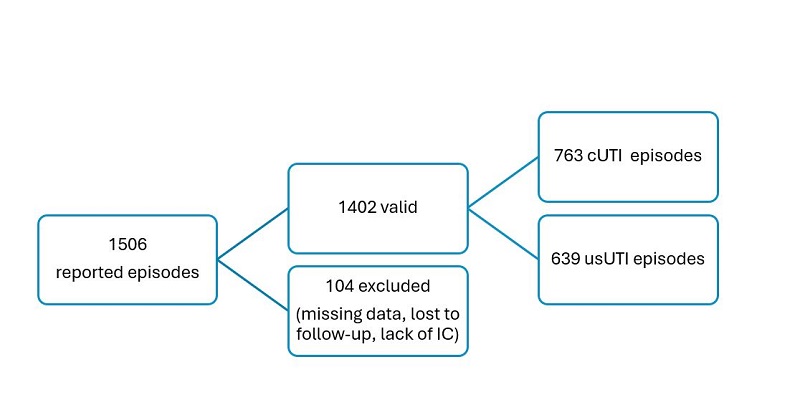
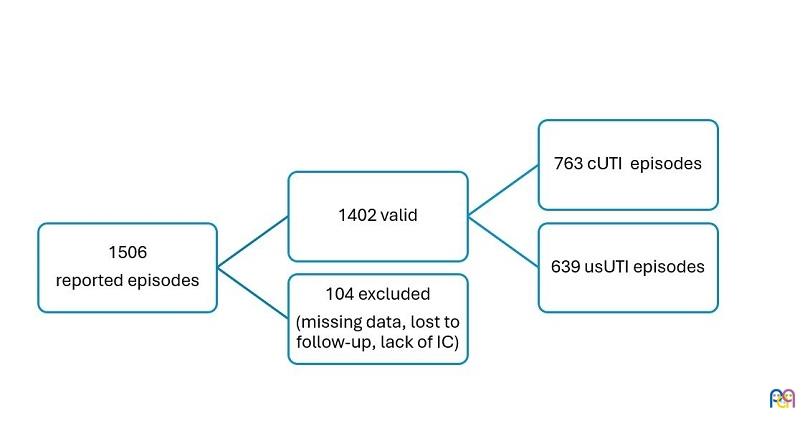
A total of 1506 records were submitted, of which 1402 were valid for the analysis. At the conclusion of the diagnostic evaluation, participating providers classified 763 episodes as cUTI cases and 639 as usUTI cases (Figure 1). Table 1 summarizes the characteristics of the episodes.
| Figure 1. Flow diagram |
|---|
 |
| Table 1. Characteristics of documented episodes | ||||
|---|---|---|---|---|
| sUTI | cUTI | usUTI | ||
| N | 1402 | 763 (54.4%) | 639 (45.6%) | |
| Sex | Female | 1026 (73.2%) | 566 (74.2%) | 460 (72%) |
| Male | 374 (26.7%) | 195 (25.5%) | 179 (28%) | |
| Not documented | 2 | 2 | ||
| Age | <2 years | 478 (34.1%) | 267 (35%) | 211 (33%) |
|
105 (7.5%) | 68 (8.9%) | 37 (5.8%) | |
|
254 (18.1%) | 145 (19%) | 109 (17%) | |
|
119 (8.5%) | 54 (7.1%) | 65 (10.2%) | |
| >2 years | 924 (66%) | 496 (65%) | 428 (67%) | |
|
459 (32.7%) | 241 (31.6%) | 218 (34.1%) | |
|
385 (27.5%) | 209 (27.4%) | 176 (27.5%) | |
|
80 (5.7%) | 46 (6%) | 34 (5.3%) | |
| Age in years, mean ± SD | 4.6 ± 3.9 | 4.6 ± 4.0 | 4.6 ± 3.8 | |
| Continence | Continent | 875 (62.4%) | 469 (61.5%) | 406 (63.5%) |
| Incontinent due to health problem | 9 | 6 | 3 | |
| Incontinent due to age | 518 (36.9%) | 288 (37.7%) | 230 (36%) | |
| Risk factors | Total | 534 (38.1%) | 324 (42.5%) | 210 (32.9%) |
| VUR | 56 | 43 | 13 | |
| Renal malformation | 63 | 43 | 20 | |
| Previous UTI | 303 | 201 | 102 | |
| Constipation/encopresis | 110 | 66 | 44 | |
| Bladder dysfunction | 41 | 26 | 15 | |
| Bladder catheterization | 4 | 4 | 0 | |
| Adhesions | 21 | 14 | 7 | |
| Phimosis | 118 | 63 | 55 | |
| Hypercalciuria | 6 | 6 | 0 | |
| No RFs | 868 (61.9%) | 439 (57.5%) | 429 (67.1%) | |
| Fever | 424 (30.2%) | 244 (32%) | 180 (28.2%) | |
| Fever in children <2 years | 275 (57.5%) | 166 (62.2%) | 109 (51.6%) | |
| Fever in children >2 years | 149 (16.1%) | 78 (15.7%) | 71 (16.6%) | |
| Prior antibiotic prophylaxis | 39 (2.8%) | 30 (3.9%) | 9 (1.4%) | |
| Cotrimoxazole | 14 | |||
| Trimethoprim | 7 | |||
| Fosfomycin | 5 | |||
| Amoxicillin | 4 | |||
| 1st generation cephalosporins | 3 | |||
| 2nd generation cephalosporins | 2 | |||
| Amoxicillin/clavulanic | 1 | |||
| Other | 3 | |||
| Antibiotic treatment in past month | 162 (11.5%) | 104 (13.6%) | 58 (9.1%) | |
| Medical visit prior to suspicion | 194 (13.8%) | 107 (14.0%) | 87 (13.6%) | |
| Time from onset to medical visit | <24 hours | 576 (41.1%) | 357 (46.8%) | 219 (34.3%) |
| 1-3 days | 565 (40.3%) | 273 (35.8%) | 292 (45.7%) | |
| 4-7 days | 150 (10.7%) | 83 (10.9%) | 67 (10.5%) | |
| >7 days | 107 (7.6%) | 47 (6.1%) | 60 (9.4%) | |
| Not documented | 4 (0.3%) | 3 (0.4%) | 1 (0.1%) | |
| Previous follow-up in nephrology | 9.2% | 13% | 4.7% | |
| Previous ultrasound | 74 (5.3%) | 70 (9.2%) | 4 (0.6%) | |
| Previous VCUG | 36 (2.6%) | 34 (4.4%) | 2 (0.3%) | |
| Previous renal scintigraphy | 35 (2.5%) | 33 (4.3%) | 2 (0.3%) | |
| cUTI: episode classified as confirmed UTI; RF: risk factor; sUTI: suspected UTI episode; usUTI: episode classified as unconfirmed suspected UTI; UTI: urinary tract infection; VCUG: voiding cystourethrography; VUR: vesicoureteral reflux. | ||||

Clinical presentation
The most commonly reported symptoms were: in children under 2 years of age, fever, irritability, and loss of appetite (fever and weight loss were significantly more frequent in the usUTI group, and diarrhea in the cUTI group); in children aged more than 2 years, dysuria, frequent urination, and abdominal pain (polyuria and changes in urine were significantly more common in the usUTI group). Table 2 presents the most frequently reported symptoms in the three diagnostic categories, broken down by age (less than 2 years, 2 years or older).
| Table 2. Documented symptoms, by diagnostic category and age group (<2 years and ≥2 years) | ||||
|---|---|---|---|---|
| Clinical presentation in children under 2 years | ||||
| Signs/symptoms | sUTI 478 |
cUTI 267 |
usUTI 211 |
p (Fisher) |
| Fever >38 °C | 275 (57.5%) | 166 (62.2%) | 109 (51.6%) | p <0.05 |
| Irritability | 138 (28.9%) | 78 (29.2%) | 60 (28.4%) | 0.302 |
| Loss of appetite | 125 (26.1%) | 40 (15%) | 85 (40.3%) | 0.055 |
| Vomiting | 77 (16.1%) | 35 (13.1%) | 42 (19.9%) | 0.254 |
| Low-grade fever | 59 (12.3%) | 29 (10.9%) | 30 (14.2%) | 0.119 |
| Weight loss | 37 (7.7%) | 4 (1.5%) | 33 (15.6%) | <0.001 |
| Changes in urine | 32 (6.7%) | 11 (4.1%) | 21 (9.9%) | 0.580 |
| Diarrhea | 31 (6.5%) | 20 (7.5%) | 11 (5.2%) | <0.01 |
| Dysuria | 28 (5.8%) | 11 (4.1%) | 17 (8%) | 1 |
| Abdominal pain | 14 (2.9%) | 2 (0.7%) | 12 (5.7%) | 0.055 |
| Frequent urination | 11 (2.3%) | 6 (2.2%) | 5 (2.4%) | 0.356 |
| Hematuria | 7 | 3 | 4 | 1 |
| Jaundice | 5 | 2 | 3 | 1 |
| Polyuria | 4 | 2 | 2 | 0.650 |
| Urinary urgency | 4 | 1 | 3 | 1 |
| Nocturia | 2 | 1 | 1 | 1 |
| Lower back pain | 2 | 0 | 2 | 0.521 |
| Tenderness on percussion + | 1 | 0 | 1 | 1 |
| Clinical presentation in children aged 2 years or older | ||||
| Signs/Symptoms | sUTI 924 |
cUTI 496 |
usUTI 428 |
p (Fisher) |
| Dysuria | 655 (70.9%) | 281 (56.7%) | 374 (87.4%) | 0.715 |
| Frequent urination | 363 (39.3%) | 154 (31%) | 209 (48.9%) | 0.684 |
| Abdominal pain | 177 (19.1%) | 87 (17.5%) | 90 (21%) | 0.091 |
| Urinary urgency | 166 (18%) | 73 (14.7%) | 93 (21.7%) | 0.863 |
| Fever >38 °C | 149 (16.1%) | 78 (15.7%) | 71 (16.6%) | 0.072 |
| Changes in urine | 88 (9.5%) | 58 (11.7%) | 30 (7%) | <0.001 |
| Nocturia | 71 (7.7%) | 29 (5.8%) | 42 (9.8%) | 0.710 |
| Low-grade fever | 46 (5%) | 22 (4.4%) | 24 (5.6%) | 0.544 |
| Polyuria | 40 (4.3%) | 11 (2.2%) | 29 (6.8%) | <0.05 |
| Hematuria | 71 (7.7%) | 32 (6.4%) | 39 (9.1%) | 0.804 |
| Vomiting | 52 (5.6%) | 26 (5.2%) | 26 (6.1%) | 0.318 |
| Irritability | 37 (4%) | 17 (3.4%) | 20 (4.7%) | 0.738 |
| Loss of appetite | 34 (3.7%) | 20 (4%) | 14 (3.3%) | 0.077 |
| Lower back pain | 28 (3%) | 15 (3%) | 13 (3%) | 0.333 |
| Diarrhea | 17 (1.8%) | 8 (1.6%) | 9 (2.1%) | 0.752 |
| Tenderness on percussion + | 16 (1.7%) | 10 (2%) | 6 (1.4%) | 0.132 |
| Weight loss | 3 (0.3%) | 2 (0.4%) | 1 (0.2%) | 0.582 |
| Jaundice | 0 | 0 | 0 | NP |
| cUTI: episode classified as confirmed UTI; sUTI: suspected UTI episode; usUTI: episode classified as unconfirmed suspected UTI; UTI: urinary tract infection. | ||||

In the subset of children aged less than 2 years presenting with a single symptom, the most frequent symptoms were fever (24%); weight faltering (4%); vomiting (2.9%); and irritability (2%). In the group aged 2 or more years, fever was reported in 1.6% of cases, and irritability in one case.
Diagnosis
In the overall sample of suspected episodes, the patient was asymptomatic in 6 cases. Additional testing was performed in 1385 episodes (98.8%). Urine culture (UC) was performed in 1044 episodes of suspected UTI (74.5%), of which 661 (86.6%) were eventually classified as cUTI and 383 (59.9%) as usUTI. In 267 cases (19%), the only test performed was the dipstick test.
In the group of children who were incontinent due to age, samples for UC were obtained through urinary catheterization or suprapubic aspiration (SPA) in 226 (43.6%).
Among the 763 episodes classified as UTIs by providers, 0.6% were missing clinical data, while only symptoms were documented in 1.2%, without performance of diagnostic tests. In 661 (86.6%), clinical data and UC results were available, and in 66 (8.6%), dipstick results were available, but not results for urinalysis or UC.
In the subset of episodes in incontinent patients classified as UTIs, clinical data were documented and UC samples obtained via catheterization or suprapubic aspiration in 152 (51.7%) patients, while in 71 (24.1%) patients, samples for UC were obtained with a urine collection bag.
Table 3 summarizes the rest of the diagnostics tests performed in the sample.
| Table 3. Diagnostic tests performed in patients with suspected UTI (by diagnostic category and sex) | ||||||
|---|---|---|---|---|---|---|
| Tests performed for suspected UTI | ||||||
| sUTI 1402* |
cUTI 763* |
usUTI 639 |
||||
| Diagnostic tests | Male 374 |
Female 1026 |
Male 195 |
Female 566 |
Male 179 |
Female 460 |
| None (diagnosis based on signs and symptoms) | 15 (1.1%) | 9 (1.2%) | 6 (0.9%) | |||
| 3 | 12 | 2 | 7 | 1 | 5 | |
| Dipstick/urinalysis | 1312* (93.6%) | 715* (93.7%) | 597 (93.4%) | |||
| 349* (93.3%) | 961* (93.7%) | 178* (91.3%) | 535* (94.5%) | 171 (95.5%) | 426 (92.6%) | |
| Sediment | 621 (44.3%) | 405 (53.1%) | 216 (33.8%) | |||
| 187 (50%) | 433 (42.2%) | 131 (67.2%) | 273 (48.2%) | 56 (31.3%) | 160 (34.8%) | |
| Dipstick only (no culture) | 267 (19%) | 66 (8.6%) | 201 (31.4%) | |||
| 84 (22.4%) | 183 (17.8%) | 7 (3.6%) | 59 (10.4%) | 77 (43%) | 124 (26.9%) | |
| Urine culture | 1044* (74.5%) | 661* (86.4%) | 383 (59.9%) | |||
| 267* (71.4%) | 775* (75.5%) | 179* (91.8%) | 480* (84.8%) | 88 (49.2%) | 295 (64.1%) | |
| Complete blood count | 208 (14.8%) | 166 (21.7%) | 42 (6.6%) | |||
| 92 (24.6%) | 116 (11.3%) | 74 (38%) | 92 (16.2%) | 18 (10%) | 24 (5.2%) | |
| CPR | 198 (14.1%) | 161 (21.1%) | 37 (5.8%) | |||
| 90 (24.1%) | 108 (10.5%) | 72 (37%) | 89 (15.7%) | 18 (10%) | 19 (4.1%) | |
| Procalcitonin | 129 (9.2%) | 110 (14.4%) | 19 (3%) | |||
| 68 (18.2%)< | 61 (5.9%) | 57 (29.2%) | 53 (9.4%) | 11 (6.1%) | 8 (1.7%) | |
| CRP: C-reactive protein; cUTI: episode classified as confirmed UTI; sUTI: suspected UTI episode; usUTI: episode classified as unconfirmed *The sex of the patient was not documented in two episodes. |
||||||

Table 4 presents the abnormal findings of urinalysis and the UC colony counts in episodes of cUTI.
| Tabla 4.1. Results of diagnostic tests performed for suspected urinary tract infection (by diagnostic category and sex) | ||||||
|---|---|---|---|---|---|---|
| Dipstick/urinalysis results | ||||||
| sUTI 1402* |
cUTI 763* |
usUTI 639 |
||||
| Male | Female | Male | Female | Male | Female | |
| Dipstick/urinalysis | 1312* (93.6%) | 715* | 597 | |||
| 349* (93.3%) | 961* (93.7%) | 178* (91.3%) | 535* (94.5%) | 171 (95.5%) | 426 (92.6%) | |
| Nitrituria | 335 (25.5%) | 286 (40%) | 49 (8.2%) | |||
| 82* (23.5%) | 251* (26.1%) | 68* (38.2%) | 216* (40.4%) | 14 (8.2%) | 35 (8.2%) | |
| EL/leukocyturia | 841 (64.1%) | 558 (78%) | 284 (47.6%) | |||
| 172* (49.3%) | 668* (69.5%) | 127* (71.3%) | 430* (80.4%) | 45* (26.3%) | 238* (55.9%) | |
| Hematuria | 525 (40%) | 368 (51.5%) | 157 (26.3%) | |||
| 105 (30.1%) | 420 (43.7%) | 84 (47.2%) | 284 (53.1%) | 21 (12.3%) | 136 (31.9%) | |
| Proteinuria | 283 (21.6%) | 197 (27.5%) | 86 (14.4%) | |||
| 73 (20.9%) | 210 (21.8%) | 55 (30.9%) | 142 (26.5%) | 18 (10.5%) | 68 (16%) | |
| cUTI: episode classified as confirmed UTI; LE: leukocyte esterase; sUTI: suspected UTI episode; usUTI: episode classified as unconfirmed suspected UTI; UTI: urinary tract infection. *The sex of the patient was not documented in two cases. |
||||||

| Tabla 4.2. Results of urine culture in episodes classified as confirmed UTI (763) | ||||
|---|---|---|---|---|
| Incontinent patients (294) | Continent patients (469) | |||
| Urine culture results (CFU/mL) | Urine collection bag only | Urinary catheter/SPA | First-void | Midstream |
| >100 000 | 65 (22.1%) | 140 (47.6%)//0 | 41 (13.9%) | 347 (74%) |
| >50 000 | 2 (0.7%) | 13 (4.42%)//0 | 2 (0.7%) | 25 (5.3%) |
| >10 000 | 3 (1%) | 14 (4.8%)//0 | 2 (0.7%) | 12 (2.5%) |
| “Positives” without recorded CFU values | 0 | 1 (0.3%)//1 (0.3%) | 0 | 7 (1.5%) |
| Contaminated (C)//Lost (L) | 1 (0.34%) | 2 (0.7%)//0 C | 0 C | 3 (0.6%) C//3 (0.6%)E |
| “Negatives” (N)// <10 000 CFU | 0 | 1 (0.3%) N//0 | 2 (0.7%) <1000 | 7(1.5%) N//7 (1.5%) <1000 |
| Urine sample collected | 71 (24.1%) | 171 (58.2%)//1 (0.3%) | 47 (16%) | 411 (87.6%) |
| CFU: colony forming units; UTI: urinary tract infection. | ||||

The dipstick tests and urinalysis results were available immediately in 85% of the episodes in which they were performed, and urine sediment results within 48 hours in 69.7% out of 456 episodes. The results of urine culture (performed in 894 episodes) were available within 24 hours in 7.7% of cases; in 48 to 72 hours in 53.5%; and past 72 hours in the remaining 38.5%.
Treatment
Empirical Antibiotherapy was initiated in 66.7% of the total ITU episodes (88.5% of cUTI episodes and 40.7% of usUTI episodes). The most frequently prescribed antimicrobials were third-generation cephalosporins, fosfomycin trometamol, cefuroxime and amoxicillin-clavulanic acid. Table 5 presents data concerning the time elapsed to treatment initiation, treatment duration, and collection of urine samples for culture prior to initiation for each of the groups.
| Table 5. Treatment of episodes of suspected UTI (by diagnostic category) | |||
|---|---|---|---|
| Empiric therapy | |||
| sUTI | cUTI | usUTI | |
| 935 (66.7%) | 675 (88.5%) | 260 (40.7%) | |
| Urine culture prior to initiation of empiric therapy | 84% | 87.8% | 74.0% |
| Duration of empiric therapy in days (mean) | 7.5 | 8.1 | 5.4 |
| Total days of antibiotic treatment (mean) | |||
| Febrile episodes | 8.5 | 9.2 | 5.7 |
| Afebrile episodes | 6.9 | 7.5 | 5.2 |
| Antibiotic | |||
|
356 (37.9%) | 270 (39.8%) | 86 (33.3%) |
|
173 (18.5%) | 111 (16.3%) | 62 (24%) |
|
128 (13.7%) | 97 (14.3%) | 31 (12%) |
|
116 (12.4%) | 84 (12.4%) | 32 (12.4%) |
|
45 (4.8%) | 25 (3.7%) | 20 (7.7%) |
|
21 (2.2%) | 16 (2.4%) | 5 (2%) |
|
76 (8.1%) | 67 (9.9%) | 9 (3.5%) |
|
37 (3.9%) | 23 (3.4%) | 14 (5.4%) |
|
49 (5.2%) | 47 (6.9%) | 2 (0.8%) |
| Total number of prescribed antibiotics* | 1001 | 740 | 261 |
| Initiated immediately upon suspicion | 77.8% | 75% | 86.6% |
| Initiated after 3 days | 6% | 7.6% | 0.8% |
| Antibiotic treatment (empiric and/or targeted) based on patient characteristics | |||
| Episodes | 72.7% | 99.5% | 40.7% |
|
76.1% | ||
|
63.1% | ||
|
67.8% | ||
|
75.2% | ||
|
73.1% | ||
|
72.5% | ||
|
77.7% | ||
| cUTI: episode classified as confirmed UTI; sUTI: suspected UTI episode; usUTI: episode classified as unconfirmed suspected UTI; UTI: urinary tract infection. *Some episodes were treated with more than one antimicrobial. |
|||

Of the 256 prescriptions for fosfomycin (for either empiric or targeted antibiotic treatment), 83.6% were for patients aged 12 years or younger. Of the 191 episodes treated with fosfomycin trometamol, 34% involved administration of two doses of the drug.
None of the prescriptions for nitrofurantoin were for male patients.
The antibiotic that was initially prescribed was switched in 135 cases (14.4%), in 73 (54%) after the results of antimicrobial susceptibility testing became available.
Outcomes
In 83.6% of suspected episodes of ITU, the provider considered that the infection had resolved at the time treatment was completed (94% of cases in the cUTI group and 66.7% in the usUTI group). In 5.4% of cases, the provider considered that symptoms persisted (5.8% in the cUTI group and 5.1% in the usUTI group). In 4.6% of cases, according to the provider, the symptoms had resolved spontaneously, without treatment (0.1% of cases in the cUTI group and 11.9% in the usUTI group).
Urine cultures were ordered for follow-up in 255 of the 1402 total cases (18.2%): 4.8% of cases in the usUTI group, and 29.4% in the cUTI group.
In 39 suspected UTI episodes (2.8%), patients had previously received antimicrobial prophylaxis. Table 1 presents the drugs used for prophylaxis in these patients. In addition, during the study period, prophylaxis was initiated in 28 episodes, all in the cUTI group, and this intervention was significantly associated with the presence of fever. Table 6 presents the drugs prescribed for prophylaxis after the UTI episode.
| Table 6. Outcomes of suspected UTI episodes (by diagnostic category) | |||
|---|---|---|---|
| Number of episodes | sUTI | cUTI | usUTI |
| Admission | 9.3% - rural 8.5% - urban 10.8% |
15.1% | 2.6% |
| Resolved at time of treatment completion | 83.6% | 94% | 66.7% |
| Spontaneous resolution | 4.6% | 0.1% | 11.9% |
| Persistent symptoms | 5.4% | 5.8% | 5.1% |
| Follow-up urine culture | 255 (18.2%) | 29.4% | 4.8% |
| Referral to nephrology | 8% | 13% | 2% |
| Prophylaxis initiated after the episode | 28 episodes | 28 episodes | 0 |
|
12 | 12 | |
|
4 | 4 | |
|
4+2* | 4+2* | |
|
3 | 3 | |
|
1 | 1 | |
|
1+1* | 1+1* | |
|
1* | 1* | |
|
1 | 1 | |
|
2 | 2 | |
| Ordered imaging tests | |||
|
249 (17.8%) | 230 (30.1%) | 19 (3%) |
|
26 (1.8%) | 25 (3.3%) | 1 (0.2%) |
|
35 (2.5%) | 32 (4.2%) | 3 (0.5%) |
|
cUTI: episode classified as confirmed UTI; sUTI: suspected UTI episode; usUTI: episode classified as unconfirmed suspected UTI; UTI: urinary tract infection; VCUG: voiding cystourethrography *Cycling antibiotic treatment |
|||

Tests were performed more frequently in febrile patients compared to afebrile patients (χ2 = 94.95; p <0.001). There was a similar trend in the ordering of DMSA renal scans ([χ2 = 31,74; p <0,001] and voiding cystourethrography [χ2 = 16.99; p = 0.017]).
Table 6 presents the results regarding hospital admissions, referral to specialty care, patient outcomes and resolution of UTI, and additional diagnostic tests.
DISCUSSION
This study, conducted in the primary care setting, contributes data on the diagnostic and therapeutic approach to suspected UTI in real-world pediatric practice, identifying areas of improvement. It started right after the publication in Spain of the recommendations for the diagnosis and treatment of urinary tract infection.7 These recommendations were followed by the publication of the pediatric urinary tract infection protocol of the Spanish Association of Pediatrics (AEP)1 and, more recently, the update of the clinical practice guidelines for UTI.5 Although some aspects of the management of UTIs are still under debate, 4-6 there are others for which there is unanimous consensus, 1,5,7-10 in spite of which there is evidence of widespread nonadherence and considerable heterogeneity in clinical practice.11-13 The diagnosis of UTI and its differentiation from asymptomatic bacteriuria require the presence of compatible clinical manifestations in addition to a positive urine culture. In this case series, most episodes were symptomatic and UTI was largely suspected based on the presence of several signs or symptoms, in accordance with current recommendations.14 None of the most frequent symptoms appeared to be significant in isolation, with the exception of fever in children aged less than 2 years. Therefore, UTI should be ruled out in any child aged less than 24 months presenting with FUO.15
The diagnosis of UTI requires microbiological identification of a uropathogen in a urine sample collected before initiation of antibiotic treatment with a method appropriate for the patient’s age and continence: midstream clean catch urine in continent children and urinary catheterization or SPA in incontinent patients.16 In spite of this, UTI is frequently diagnosed and treatment prescribed without performance of urine culture or results obtained with specimens collected through urine bags in incontinent patients, 11,12 a technique that is not recommended due to the high risk of contamination and false-positive rates.16-18 In our study, urine cultures were not performed in one-quarter of suspected cases, and 13.4% of episodes were considered confirmed without performance of urine culture. In a small percentage of cases, the reference laboratory reported the urine culture as positive without specifying the colony count, even though, according to the current literature, quantification is essential for adequate interpretation and clinical decision-making.
In 16% of suspected episodes, empiric therapy was initiated without prior collection of a sample for UC (26% of those cases were ultimately not classified as UTIs). In one-quarter of the cases involving patients incontinent due to age in whom providers considered the UTI confirmed, the diagnosis was based on the clinical presentation and the results of UC in specimens obtained through a urine collection bag. Misdiagnosis can lead to inappropriate treatment and further unnecessary testing.
When a UTI is suspected, early initiation of antibiotic treatment is customary. In our study, antibiotics were prescribed in 66.7% of episodes, a proportion lower than reported in other published studies, particularly in the usUTI group (40.7%).19 In most cases (77.8%), empiric therapy was initiated immediately upon suspicion, probably to avoid complications resulting from delayed initiation, especially in febrile episodes.20 It may also have been due to the delay in receiving culture results, which was longer than 72 hours in 38% of cases and between 48 and 72 hours in 53.5% of cases. Overall, the turnaround time was shorter than previously reported,21 but still far from adequate, as negative cultures should be reported (and the results made available to the provider) within 24 hours. Another factor that may have been at play is the fact that in 18.3% of suspected episodes, the visit to PC took place more than 3 days after onset, and only 41.1% of patients visited the PC center in the first 24 hours. Although current guidelines recommend shorter courses of treatment for uncomplicated UTI,5,8,22 previous studies have found durations of 10 days or longer in up to 47.6% of cases of UTI.23 In our study, the mean duration exceeded recommendations for both febrile and afebrile UTI (8.5 and 6.9 days, respectively). This could also be explained by the prolonged turnaround times for UC.
The selection of antimicrobials reported in our case series was appropriate based on the published etiology and antimicrobial resistance data in Spain,24-27 although antibiotic selection should be based on local resistance patterns.5 Recurring shortages of cefuroxime axetil may have contributed to third-generation cephalosporins being the most frequently prescribed antimicrobials. The second most frequently prescribed drug was fosfomycin trometamol. Of the total prescriptions (empirical and targeted) for fosfomycin, 83.6% were for children aged 12 years or younger. According to the alert issued by the European Medicines Agency in 202028 and the subsequent modification of the summary of product characteristics, these prescriptions would currently be considered off label. In 34% of the cases treated with fosfomycin trometamol, two doses were prescribed, even though the guidelines recommend a single dose; in other words, there was overtreatment.
Notably, there were four cases in which, despite being classified as UTIs, no treatment was prescribed, which carries a risk of progression and/or complications.
Nitrofurantoin was not prescribed for treatment to any male patients, in compliance with the summary of product characteristics, however, it was used off label for prophylaxis in one boy.
In our study, most episodes were managed on an outpatient basis; 9.3% required hospitalization, with a higher proportion of admission (15.1%) in the group of episodes diagnosed as UTI. An overall hospitalization rate of approximately 27% has been reported, with higher rates of up to 89% in infants aged less than 2 months and lower rates of around 15% in children aged 2 to 24 months, which between hospitals in the range of 6% to 64%.29 Eight percent of cases were referred to hospital-based specialists, a lower proportion compared to the subset of patients who were already in follow-up, with proportions of referral of 2% in the usUTI group and 13% in the cUTI group. These figures may be related to the lack of access to certain tests from PC. The proportion of patients in each diagnostic category that were already in follow-up at the time of the episode was 9.2%, 4.7%, and 13%, respectively.
At this time, performance of follow-up UCs is not recommended for cases with favorable outcomes.16 In our study, follow-up UCs were ordered in slightly less than 20% of suspected episodes and in nearly 30% of cUTI cases, even though in the latter group, providers considered the outcome be favorable in 94% of cases. This practice could lead to overdiagnosis of new episodes of UTI and increased intervention, additional health care costs, in addition to the risk of iatrogenic complications.
After a UTI is diagnosed, imaging studies may be ordered to detect predisposing structural abnormalities and/or complications or sequelae of the infection, although it is unclear that their findings lead to changes in management or outcomes.5 At present, the most frequently ordered imaging test is the kidney ultrasound.5,10,14,16 According to a recent meta-analysis, this modality may detect anomalies in 22.1% of cases, which may be clinically relevant in 3.1% of febrile UTI cases,30 but has limitations in the assessment of vesicoureteral reflux or renal scarring. In our study, an ultrasound scan was performed in 17.8% of suspected episodes and 30.1% of cUTI cases, possibly in relation to the high frequency of febrile cases; while voiding cystourethrography (VCUG) and renal scintigraphy scans were ordered in very small percentages. According to the recent update of the European Association of Urology/ European Society for Paediatric Urology guidelines on UTI in children, VCUG is indicated after the first febrile UTI in infants under 12 months, regardless of ultrasound results.16 In the recent update of the Spanish clinical practice guidelines, age less than 12 months, in absence of other risk factors, is not considered an indication for VCUG.5
The indications for antibiotic prophylaxis have been restricted recently. In our study, it was prescribed in 28 cases, which amounted to 3.7% of the total episodes diagnosed as UTIs (2% of initially suspected episodes), a figure that was significantly lower compared to other studies,19 and in an additional 39 cases (2.8%) patients were already receiving it. Overall, the antimicrobials prescribed for prophylaxis adhered to recommendations, with only one case of prescription of nitrofurantoin, which is not indicated for prophylaxis based on the summary of product characteristics.
There are limitations to our study: we were unable to calculate frequencies, as we could not ascertain whether all suspected cases were reported, and we only analyzed certain variables in relation to the presence or absence of fever. The representation of the autonomous communities of Spain was uneven and not proportional, partly due to bureaucratic barriers, and providers collaborated on a voluntary basis. The state of alarm imposed a few months after the declaration of the COVID-19 pandemic may have driven changes in clinical practice during the study period.
The main strength of this study, with its nationwide multicenter design, is that it contributes information on the real-world management of suspected UTIs in every care setting through the prospective collection of data on all aspects of management that can help identify areas of improvement. The providers who submitted data were not given specific directions on which criteria to apply to confirm or rule out the diagnosis of UTI, which makes this data particularly valuable for understanding how UTI is diagnosed in real-world practice.
Other studies have contributed data regarding confirmed UTI cases or have conducted surveys regarding the management of UTIs without including actual case data.12
CONCLUSIONS
To conclude, we would like to highlight the following:
- In a significant number of cases, the diagnosis did not adhere to current guidelines either because a urine sample was not collected for culture, even in episodes in which treatment was initiated, or because the sample collection method was inadequate (collection by means of a urine collection bag in incontinent patients).
- There was overtreatment in terms of the number of initiated courses of treatment, the duration of treatment (in both febrile and afebrile episodes), and the high use of broad-spectrum antibiotics.
- Follow-up urine cultures were performed in a high proportion of cases.
- The turnaround time for tests was not optimal.
- The findings of our study can help identify and raise awareness of areas in which clinical practice deviates current recommendations, thus contributing to its improvement. Further studies should be conducted to assess how these trends evolve over time.
CONFLICTS OF INTEREST
The authors have no conflicts of interest to declare in relation to the preparation and publication of this article.
AUTHORSHIP
All authors have contributed equally to the preparation of the published manuscript.
Preliminary results from this project were presented as oral communications at the 2024 Congress of the AEPap (Spanish Association of Primary Care Pediatrics). Preliminary results from this work have also been accepted for presentation as an oral communication and a poster at the 2026 Congress of the AEPap.
FUNDING
The study was awarded an AEPap-FPS grant for research in primary care pediatrics in 2019.
ABBREVIATIONS
AC: autonomous community · cUTI: confirmed urinary tract infection ·FUO: fever of unknown origin · PC: primary care · SPA: suprapubic aspiration · UC: urine culture · usUTI: unconfirmed suspected urinary tract infection · UTI: urinary tract infection.
ACKNOWLEDGMENTS
We take this opportunity to thank all the contributors who helped with the identification and documentation of the cases.
REFERENCES
- González Rodríguez JD, Justa Roldán MJ. Infección de las vías urinarias en la infancia. Protoc diagn ter pediatr. 2022;1:103-29 [online] [accessed 13/05/2026]. Available at https://static.aeped.es/07_infeccion_b0ac70529a.pdf
- Tullus K, Shaikh N. Urinary tract infections in children. 2020;395:1659-68. https://doi.org/10.1016/s0140-6736(20)30676-0
- Brandström P, Lindén M. How Swedish guidelines on urinary tract infections in children compare to Canadian, American and European guidelines. Acta Paediatr. 2021;110:1759-71. https://doi.org/10.1111/apa.15727
- Khoury l, Schnapp Z, Konopnicki M. Improving management: novel guidelines for diagnosing urinary tract infection in infants. Pediatr Infect Dis J. 2024;43(7):609-13. https://doi.org/10.1097/INF.0000000000004292
- Grupo de trabajo de la Guía de Práctica Clínica sobre Infección del Tracto Urinario en la Población Pediátrica. Guía de Práctica Clínica. Infección del Tracto Urinario en la Población Pediátrica. Actualización 2024 [online] [accessed 13/05/2026]. Available at https://serviciopediatria.com/wp-content/uploads/2024/05/2024_GPC-Infeccion-Tracto-Urinario-en-Pediatria.pdf
- Okarska-Napierała M, Wasilewska A, Kuchar E. Urinary tract infection in children: diagnosis, treatment, imaging - comparison of current guidelines. J Pediatr Urol. 2017;13(6):567-73. https://doi.org/10.1016/j.jpurol.2017.07.018
- Piñeiro R, Cilleruelo MJ, Ares J, Baquero-Artigao F, Silva JC, Velasco R, et al. Recomendaciones sobre el diagnóstico y tratamiento de la infección urinaria. An Pediatr(Barc). 2019;90(6):400.e1-e9. https://doi.org/10.1016/j.anpedi.2019.02.009
- Buettcher M, Trueck J, Niederer-Loher A, Heininger U, Agyeman P, Asner S, et al. Swiss consensus recommendations on urinary tract infections in children. Eur J Pediatr. 2021;180:663-74. https://doi.org/10.1007/s00431-020-03714-4
- Mattoo TK, Shaikh N, Nelson CP. Contemporary management of urinary tract infection in children. Pediatrics. 2021;147:e2020012138. https://doi.org/10.1542/peds.2020-012138
- Grupo de trabajo de la Guía de Práctica Clínica sobre Infección del Tracto Urinario en la Población Pediátrica. Guía de práctica clínica sobre infección del tracto urinario en la población pediátrica. Madrid: Plan de Calidad para el Sistema Nacional de Salud del Ministerio de Sanidad; Zaragoza: Instituto Aragonés de Ciencias de la Salud; 2011. (Guías de Práctica Clínica en el SNS: I+CS núm. 2009/01) [online] [accessed 13/05/2026]. Available at https://portal.guiasalud.es/wp-content/uploads/2018/12/GPC_483_ITU_poblacion_pediatrica_ICS_compl.pdf
- Hadjipanayis A, Grossman Z, Torso S Del, Van Esso D, Dornbusch HJ, Mazur A, et al. Current primary care management of children aged 1–36 months with urinary tract infections in Europe: large scale survey of paediatric practice. Arch Dis Child. 2015;100:341-7. https://doi.org/10.1136/archdischild-2014-306119
- Cenzato F, Milani GP, Amigoni A, Sperotto F, Bianchetti MG, Agostoni C, et al. Diagnosis and management of urinary tract infections in children aged 2 months to 3 years in the Italian emergency units: the ItaUTI study. Eur J Pediatr. 2022;181(7):2663-71. https://doi.org/10.1007/s00431-022-04457-0
- Lindén M, Rosenblad T, Hansson S, Brandström P. Adherence to the Swedish paediatric guidelines for urinary tract infections. Acta Paediatr. 2025;114:1229-37. https://doi.org/10.1111/apa.17554
- Ammenti A, Alberici I, Brugnara M, Chimenz R, Guarino S, La Manna A, et al. Updated Italian recommendations for the diagnosis, treatment and follow-up of the first febrile urinary tract infection in young children. Acta Paediatr. 2020;109:236-47. https://doi.org/10.1111/apa.14988
- Mintegi S, Gómez B, Velasco R. Fiebre sin focalidad en lactante de 0-24 meses previamente sano. In: Protocolos diagnósticos y terapéuticos en urgencias de pediatría. 4th ed. Madrid: Sociedad Española de Urgencias de Pediatría; 2024 [online] [accessed 13/05/2026]. Available at https://seup.org/wp-content/uploads/2025/06/14-Lactante-febril-Junio-25R.pdf
- Gnech M, Bujons A, Radmayr C, 't Hoen l, Bogaert G, Burgu B, et al. Update and summary of the EAU/ESPU paediatric guidelines on urinary tract infection in children. J Pediatr Urol. 2026;22(2):105481. https://doi.org/10.1016/j.jpurol.2025.06.016
- Ochoa C, Pascual A. Revisión sistemática de la validez de los urocultivos recogidos con bolsa estéril perineal. An Pediatr (Barc). 2016;84(2):97-105. https://doi.org/10.1016/j.anpedi.2015.04.003
- Doern CD, Richardson SE. Diagnosis of urinary tract Infections in children. J Clin Microbiol. 2016;54(9):2233-42. https://doi.org/10.1128/JCM.00189-16
- Vazouras K, Jackson C, Folgori l, Anastasiou-Katsiardani A, Hsia Y, Basmaci R. Quality indicators for appropriate antibiotic prescribing in urinary tract infections in children. BMC Infect Dis. 2023;23(1):400. https://doi.org/10.1186/s12879-023-08356-z
- Shaikh N, Mattoo TK, Keren R, Ivanova A, Cui G, Moxey-Mims M, et al. Early antibiotic treatment for pediatric febrile urinary tract infection and renal scarring. JAMA Pediatr. 2016;170(9):848-54. https://doi.org/10.1001/jamapediatrics.2016.1181
- Martín Y, Albañil MR, García C, Jiménez R, Muñoz E, Martínez MJ, en representación del Grupo de Patología Infecciosa (GPI) de la Asociación Española de Pediatría de Atención Primaria (AEPap). Acceso a pruebas complementarias para el diagnóstico de enfermedades infecciosas en las consultas de pediatría de atención primaria. An Pediatr. 2021;94(2):82-91. http://dx.doi.org/10.1016/j.anpedi.2020.03.015
- Bryant PA, Bitsori M, Vardaki K, Vaezipour N, Khan M, Buettcher M. Guidelines for complicated urinary tract infections in children: a review by the European Society for Pediatric Infectious Diseases. Pediatr Infect Dis J. 2025;44(6):e211-223. https://doi.org/10.1097/INF.0000000000004790
- Shah RM, Sun S, Shteynberg E, Scardina T, Whitmer G, Patel SJ. Drivers of prolonged outpatient antibiotic therapy for urinary tract infections and community-acquired pneumonia. J Pediatric Infect Dis Soc. 2022;11(12):543-9. https://doi.org/10.1093/jpids/piac083
- Rodríguez-Lozano J, De Malet A, Cano ME, De la Rubia l, Wallmann R, Martínez-Martínez l, et al. Antimicrobial susceptibility of microorganisms that cause urinary tract infections in pediatric patients. Enferm Infecc Microbiol Clin. 2018;36(7):417-22. https://doi.org/10.1016/j.eimc.2017.08.003
- Moya-Dionisio V, Díaz-Zabala M, Ibáñez-Fernández A, Suárez-Leiva P, Martínez-Suárez V, Ordóñez-Álvarez FA, et al. Patrón de aislamiento bacteriano y sensibilidad antimicrobiana en urocultivos positivos obtenidos de una población pediátrica. Rev Esp Quimioter. 2016;29(3):146-50.
- Martínez Campos l, Carazo Gallego B, Berghezan Suárez A, Álvarez Ares J, Cruz Cañete M, Olmedo Díaz I. Características clínicas y microbiológicas de una muestra de 1200 urocultivos pediátricos. In: Asociación Española de Pediatría. Libro de ponencias y comunicaciones del 67° Congreso AEP. Madrid: AEP; 2024. p. 551-2 [online] [accessed 13/05/2026]. Available at www.congresoaep.org/static/upload/ow28/events/ev231/Site/files/libro/551/
- Albañil Ballesteros MR, Cubero Santos A, Martínez Chamorro MJ, Muñoz Hiraldo ME, Ares Álvarez J, Morillo Gutiérrez B, et al. Etiología y resistencia a los antibióticos en la infección urinaria pediátrica. Estudio multicéntrico desde Atención Primaria. Rev Pediatr Aten Primaria. 2024;26:361-72. https://doi.org/10.60147/5d2a9a33
- Recomendaciones para restringir el uso de los antibióticos con fosfomicina (EMA/317719/2020). In: European Medicines Agency (EMA) [online] [accessed 13/05/2026]. Available at www.ema.europa.eu/en/documents/referral/fosfomycin-article-31-referral-recommendations-restrict-use-fosfomycin-antibiotics_es.pdf
- Chaudhari PP, Monuteaux MC, Bachur RG. Management of urinary tract infections in young children: balancing admission with the risk of emergency department revisits. Acad Pediatr. 2019;19(2):203-8. https://doi.org/10.1016/j.acap.2018.05.011
- Yang S, Gill PJ, Anwar MR, Nurse K, Mahood Q, Borkhoff CM, et al. Kidney ultrasonography after first febrile urinary tract infection in children: a systematic review and meta-analysis. JAMA Pediatr. 2023;177(8):764-73. https://doi.org/10.1001/jamapediatrics.2023.1387